


Key takeaways
Definition: B2B SaaS marketing is the practice of promoting cloud-based software products to other businesses in order to generate sustainable, recurring revenue. It sits on four strategic foundations: value proposition, value discovery, pricing and market awareness.
Three things set B2B SaaS marketing apart from traditional B2B marketing: subscription pricing, product-led growth and a greater reliance on education to explain complex products in emerging markets.
Focus on a simple, tangible outcome for a specific audience. At the heart of any B2B SaaS marketing strategy is a sharp value proposition that defines the tangible business outcome you provide and the specific audience you deliver it to.
Prospects find their SaaS “Wow!” moment in two different ways. Free trials let prospects discover a SaaS product’s value on their own terms, not just through sales-led demos. That opens up the field and creates the need for dedicated product marketing.
For free trials, consider asking for a payment method upfront. Data from over 200 software providers suggest that free trials that require a payment method upfront convert into paying customers at a significantly higher rate, with a signup-to-customer rate of 30%.
Price on value, not cost. Unlike traditional B2B companies, SaaS businesses spend very little to produce each new unit, such as adding a user. Pricing based on production costs will almost always leave money on the table. Instead, pricing should be centered around the value the tool delivers to customers.
Message and copy come before the channel. Before choosing any channels, B2B SaaS marketers need to define how they want to address prospects at each awareness level within their target market.
Figure out organic growth tactics before you add paid ones. Paid tactics like ads amplify growth when they run on top of an already working organic growth motion. Without that foundation, you’re pouring budget into a leaky bucket and only accelerating problems like churn.
Success metrics should support a testing-first approach. B2B SaaS marketing success requires relentless testing. That’s why the evaluation of marketing tactics should revolve around a short-term North Star metric that is able to display success or failure on a weekly basis. Consider marketing-qualified leads for sales-led growth and product-qualified leads for product-led growth.
Hey 👋🏼 I'm Fabian, great to have you here. In my newsletter "Get Hooked! Marketing", I share proven tactics from the trenches of B2B SaaS advertising every week. Built to make you a top 5% marketer.
Copy the "Persona Framework" I use to repeatedly build simple static ads that generate six-figure B2B SaaS revenue. Backed by more than 6,000 hours of creative testing and $5M+ in ARR generated.
Table of contents
What is B2B SaaS marketing?
How does B2B SaaS marketing differ from standard B2B marketing?
Educational communication
Subscription and usage-based pricing
Product-led growth and expansion
The 4 fundamentals of B2B SaaS marketing
Value proposition
Value discovery: sales-led and product-led
Pricing
Market awareness
8 proven B2B SaaS marketing tactics for generating revenue
Build a B2B SaaS website that converts
Use proprietary data to rank in Google and AI search
Build a founder-led brand on LinkedIn and Substack
Nurture leads with email and WhatsApp newsletters
Implement a referral system
Design an onboarding flow that activates users
Scale with paid ads: Google, LinkedIn and Meta
Grow further with affiliate and partner programs
How to measure B2B SaaS marketing success
What is B2B SaaS marketing?
📝 Note: B2B SaaS marketing is the practice of promoting cloud-based software products to other businesses in order to generate sustainable, recurring revenue.
To succeed, B2B SaaS marketing moves prospects from unaware to ready to buy, backed by a clear offer-to-audience fit, a pricing model that maximizes revenue and a growth motion that blends sales-led and product-led elements.
B2B (business-to-business) refers to deals between businesses rather than between a business and a consumer. These deals tend to involve complex products or services and multiple stakeholders, which leads to long-term relationships with ongoing support. That’s why a single customer’s lifetime value runs so much higher than in B2C (business-to-consumer).
SaaS (Software-as-a-Service) is software you access online instead of installing locally. Two players make it possible:
Cloud service providers, like AWS or Microsoft Azure, handle the underlying infrastructure: computing power, storage and databases.
SaaS businesses, like Slack or Salesforce, rent that infrastructure to build, maintain and sell software to end customers.
This setup keeps costs down for both SaaS businesses and their customers. That’s why SaaS has become the dominant software model, with a global market size of $634B in 2026, projected to reach $4.44T by 2034.
At its core, marketing is about consistently aligning your entire business with your target market’s needs to generate sustainable revenue. To get there, you need the right answers to these questions:
Value proposition: What tangible outcome does your SaaS product deliver and to whom?
Value discovery: How do prospects access and try your product? Is the growth motion sales-led or product-led?
Pricing: How do you monetize your offer to maximize revenue?
Market awareness: How do you move your audience from unaware to ready to buy?
How does B2B SaaS marketing differ from standard B2B marketing?
B2B offers range from simple to complex. You can market recruiting services to a three-person team or an entire new assembly line to a company like Volkswagen.
B2B SaaS products usually sit on the complex end. Not necessarily because more people are involved in buying (SaaS businesses can sell to small businesses that have just one decision-maker), but because of what a SaaS product actually is.
A B2B SaaS product:
Packs in dozens of features, with more added as the product evolves.
Needs to integrate into the customer’s existing software stack.
Often enters new markets and use cases, acting as the spearhead of software innovation for businesses.
Educational communication
In these new markets, most buyers don’t yet know they have the problem the product solves. Many aren’t especially tech-savvy either. That’s why B2B SaaS marketing needs to lean more toward education than marketing for traditional B2B services like lead generation.
Subscription and usage-based pricing
Pricing sets B2B SaaS apart too. Most SaaS products run on subscription or usage-based models, while other B2B businesses, like manufacturers, charge a fixed, one-time project fee. That said, recurring pricing isn’t exclusive to SaaS. Agencies, for example, charge recurring retainers too.
Product-led growth and expansion
The clearest differentiator is product-led growth. Traditional B2B marketing exists to generate qualified leads that turn into customers and revenue. That goal still matters in B2B SaaS but there’s another lever available: the product itself can become your best salesperson.
A free trial gives prospects hands-on access to the product for a limited time. Good product design and smart product marketing get users to real value fast, nudging them to upgrade to paying customers with zero sales interaction.
This product-led focus matters for another reason: B2B SaaS success doesn’t stop at the initial sale. Expansion and upgrade revenue become the most important drivers of growth.
📝 Note: Product-led growth and an education-first approach line up well with what today’s B2B buyers actually want: most prefer to do research on their own and would rather skip the sales rep altogether.
The 4 fundamentals of B2B SaaS marketing
At this point, most articles pile on jargon: ideal customer profile, firmographics, technographics, buyer persona, buying committee and so on. All of these terms have their place. But I strongly believe your strategy fundamentals should fit on a single sheet of paper.
📝 Note: Simplicity is your edge in B2B SaaS marketing, both in how you craft your plan and how you execute it. Why? Because people trust what’s easy to understand. Simple ideas feel true, important and valuable. That applies to your boss, your team and, most of all, your prospects and customers.
The next four sections cover everything you need to build a marketing strategy that’s lean and effective.
Value proposition
A good value proposition answers one question:
📝 Note: What tangible business outcome can your product deliver and for which specific audience?
The framing matters. A business outcome is not a feature. It’s a result, a solution to a problem, something you could put a number on. Specificity applies to your audience too. You’re not selling to “businesses”. You’re selling to a specific vertical, a specific job title or a specific use case.
That specificity works in your favor: it increases relevancy dramatically, building up your brand each time your target audience reads your value proposition:
Add $100K in monthly sales as a solar PV installer…
Cut CAD software costs in half as an automotive OEM…
Reach 110% quota attainment each month as a B2B SaaS sales manager…
Turn $1K in Meta ad spend into 150 qualified B2B leads per week…
Get SOC 2 certified in 12 months, not 3 years…
💡 Tip: When you quantify a business outcome, be careful with relative numbers. “$100K in monthly sales” is far easier to grasp than “a 58% increase in sales”. If you want to use relative numbers, use either very high or very low numbers to make the transformation crystal clear.
While sharp business outcomes matter to demonstrate ROI, B2B SaaS marketers shouldn’t ignore personal, emotional outcomes that relate to problems in daily working life. At the end of the day, we’re marketing to human beings:
Stop dreading exec meetings by showing proof that marketing drives revenue…
Save yourself 100 “Fuck this!” moments and build sales dashboards with ease…
Spot at-risk accounts before the cancellation email ruins your Friday afternoon…
Both ROI-driven and emotional value propositions can work for B2B SaaS. What’s best for you always comes down to testing.
Repeat your value proposition everywhere
Successful marketing and branding run on repetition. That’s why your value proposition needs to show up everywhere: your website, your social profiles, your ads, all of it. It’s the cornerstone of your B2B SaaS marketing strategy.
📚 Reading Tip: Your hook is the single element that determines whether your audience stops or keeps scrolling. The 7+1 commandments for writing irresistible marketing hooks are drawn from 6,000+ hours of copywriting experience and $5M+ in ARR generated.
Differentiation and proof
Your value proposition is sharp and outcome-driven. But why should anyone believe it?
Differentiation and proof are the two most important extensions of your value proposition. Not every marketing asset needs both but your website does. Because they’re fundamental conversion drivers.
To cover both, you have to answer these three questions:
How does my SaaS product work?
How is it different from competitors?
How do customers use it successfully?
Number one is the actual mechanism of your SaaS product. What does it do to achieve the promised outcome?
Turn $1K in Meta ad spend into 150 qualified B2B leads per week… by using mobile-optimized landing pages for Facebook and Instagram users.
Your prospects understand what your SaaS does. Now they want to know what makes it better than other tools. Mix and match the following seven differentiators to find your clear distinction:
Niching down: In a market where incumbents sell to a broad audience, niching down on a specific vertical comes with two advantages. First, your messaging gets more specific, which makes it more relevant. Second, the same applies to your product, for example by integrating into a vertical-specific software stack.
Feature focus: Instead of niching down on a market, niche down on product features and use cases. Take a proven feature from an incumbent and make it better by pouring in more time and resources.
Pricing: Undercutting the incumbent on price is the obvious move. But SaaS pricing is often confusing and that confusion is an opening. With clear, simple pricing, you create a real differentiator.
Time-to-value: How fast do users hit their first “Wow!” moment? That’s where your SaaS wins or loses. Intuitive UX pulls people in. Clunky UX pushes them out.
Privacy policy: This differentiator carries extra weight if you market your SaaS in Europe. Privacy rules are stricter and users are more wary of US-based companies. Being GDPR-compliant gives you a real edge.
Branding: When SaaS products match on quality and features, a memorable and consistent brand, with clear personality, becomes the tiebreaker.
Customer satisfaction: Scroll through G2 or any B2B review platform and you’ll spot a pattern: before reviewers mention a single product feature, they talk about the sales or support team. That human connection sticks. Rack up those reviews and you’re building a moat.
Customer testimonials are the final piece of a bulletproof value proposition. They prove your promises are achievable.
To get great testimonials, I always ask customers these four questions:
What specific problem were you facing?
What was the turning point: when did you decide to look for a solution and why did you choose us?
What changed after you started using our product?
Would you recommend us to others and why?
Value discovery: sales-led and product-led
Prospects find their SaaS “Wow!” moment in one of two ways:
Sales-led: They book a demo, get a guided walkthrough from a sales rep and often move into onboarding with customer success.
Product-led: They start a free trial and explore the product on their own terms.
Both growth motions carry real advantages.
For complex, high average contract value (ACV) products ($10K+ ARR), sold into enterprise-grade companies with many stakeholders, a sales manager adds tons of value.
For simpler products with a lower ACV, and when you have limited or no budget for a sales team, self-serve is the better fit.
In reality, sales- and product-led motions are often mixed. A business with a product-led approach might decide to move into enterprise territory and add sales managers for good reason. Trials also let businesses collect valuable usage data. With a blended approach, businesses can craft data-driven outreach at the exact moments users hit key milestones.
Gartner’s research backs up the need for both: 67% of B2B buyers say they want a rep-free sales journey, yet those same self-serve deals lead to more purchase regret.
📝 Note: Almost every B2B SaaS business should start with a working product-led growth motion. It’s proof of product-market fit. It also makes everything downstream easier, from scaling lean to layering on a sales team.
Free trial vs freemium vs reverse trial
Over the years, three distinct approaches to building a product-led growth motion have emerged:
Free trial: A time-limited trial that unlocks all basic features plus a taste of premium. May require a credit card upfront, which gets charged once the trial ends.
Freemium: Free, unrestricted access to basic features with no time limit.
Reverse trial: A hybrid of free trial and freemium. Users get full access to basic and premium features for a limited time. When the trial ends, they choose to downgrade to freemium or upgrade to a paid tier. This motion is driven by the loss aversion effect, where the pain of losing something is twice as powerful a motivator as the pleasure of gaining something.
So, which of these three motions performs best? Kyle Poyar from Growth Unhinged teamed up with ChartMogul and ProductLed to analyze 200 software products.
Free trials are the clear favorite, with 57% of respondents naming them their primary conversion point, followed by freemium at 26% and reverse trial at just 7%. Meanwhile, 14 days is the most popular trial length, used by 67% of respondents.
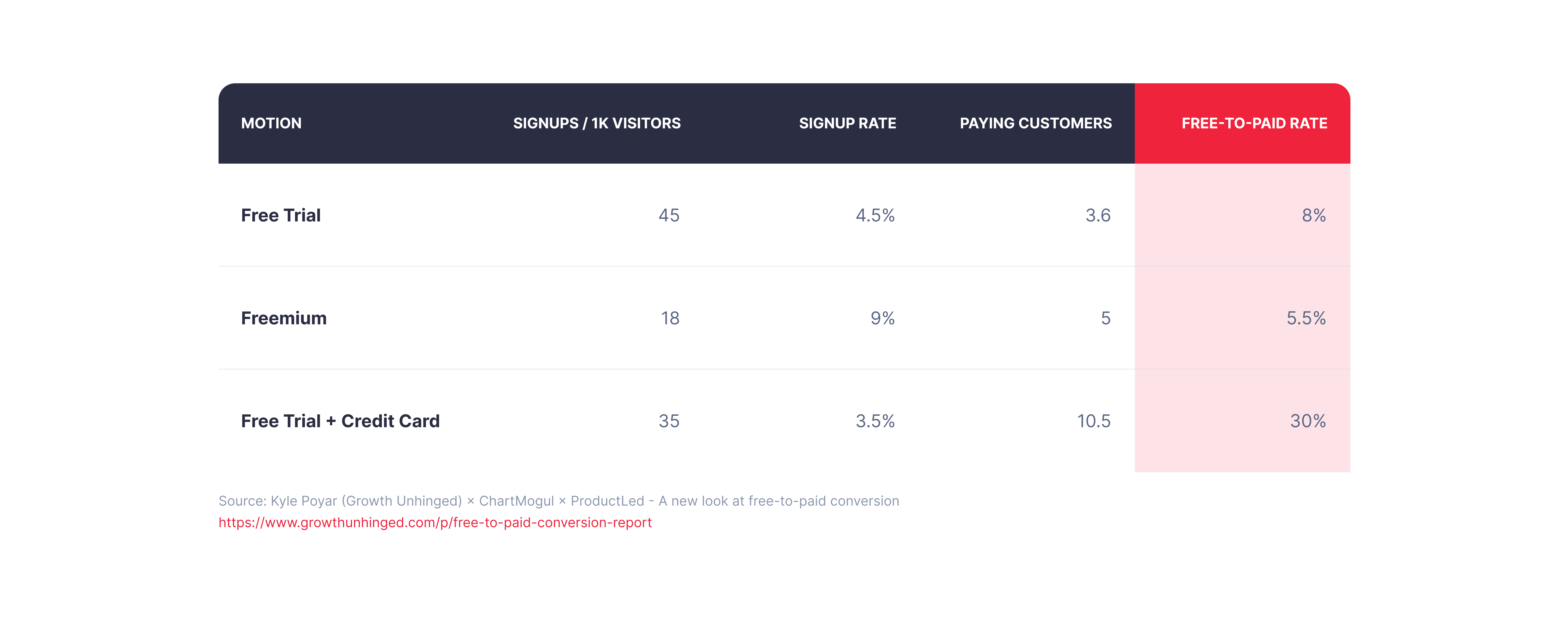
Across all 200 products, the median free-to-paid conversion rate sits at 8%. Yet the rate shifts significantly depending on the motion you’re looking at:
Free trial → 1K visitors with 45 signups (4.5% CR) turning into 3.6 paying customers (8% CR)
Freemium → 1K visitors with 90 signups (9% CR) turning into 5 paying customers (5.5% CR)
Free trial with credit card → 1K visitors with 35 signups (3.5% CR) turning into 10.5 paying customers (30% CR)
💡 Tip: If you want to maximize your free-to-paid conversion rate, consider requiring a payment method upfront. This will reduce signups but the higher conversion rate into paying customers can more than make up for it.
Pricing
SaaS businesses have nearly limitless flexibility in how they price their products. Combine that with a constantly shifting landscape, accelerated by AI, and you've got a genuinely complex task ahead of you.
But what never changes are the basics on which any successful pricing strategy is built.
Price based on value
Unlike traditional B2B businesses such as manufacturers, SaaS companies should avoid cost-based pricing.
Here’s why: scaling software is dramatically cheaper and more efficient. A production-heavy company has to factor in additional materials and labor for every new unit. A SaaS company adding a new user pays relatively little. If you price your product based only on maintenance or server costs, you’re leaving massive revenue on the table.
Instead, use a value-based approach. If your product generates $10K in annual revenue for customers, use this outcome as your pricing starting point.
Your job is to figure out what potential customers are actually willing to pay. Market research and competitor analysis can help but nothing beats talking directly to real prospects.
📝 Note: There are exceptions to a purely value-based pricing approach. If your business runs on an API and racks up significant paid API calls, you need to build these COGS into your pricing as markups. AI features that regularly call the ChatGPT or Claude API are a great example. The need for a more cost-based approach also shows up in target gross margins for tech companies. Very few believe that SaaS-like gross margins above 80% are achievable for AI features and products.
Start with flat-fee pricing
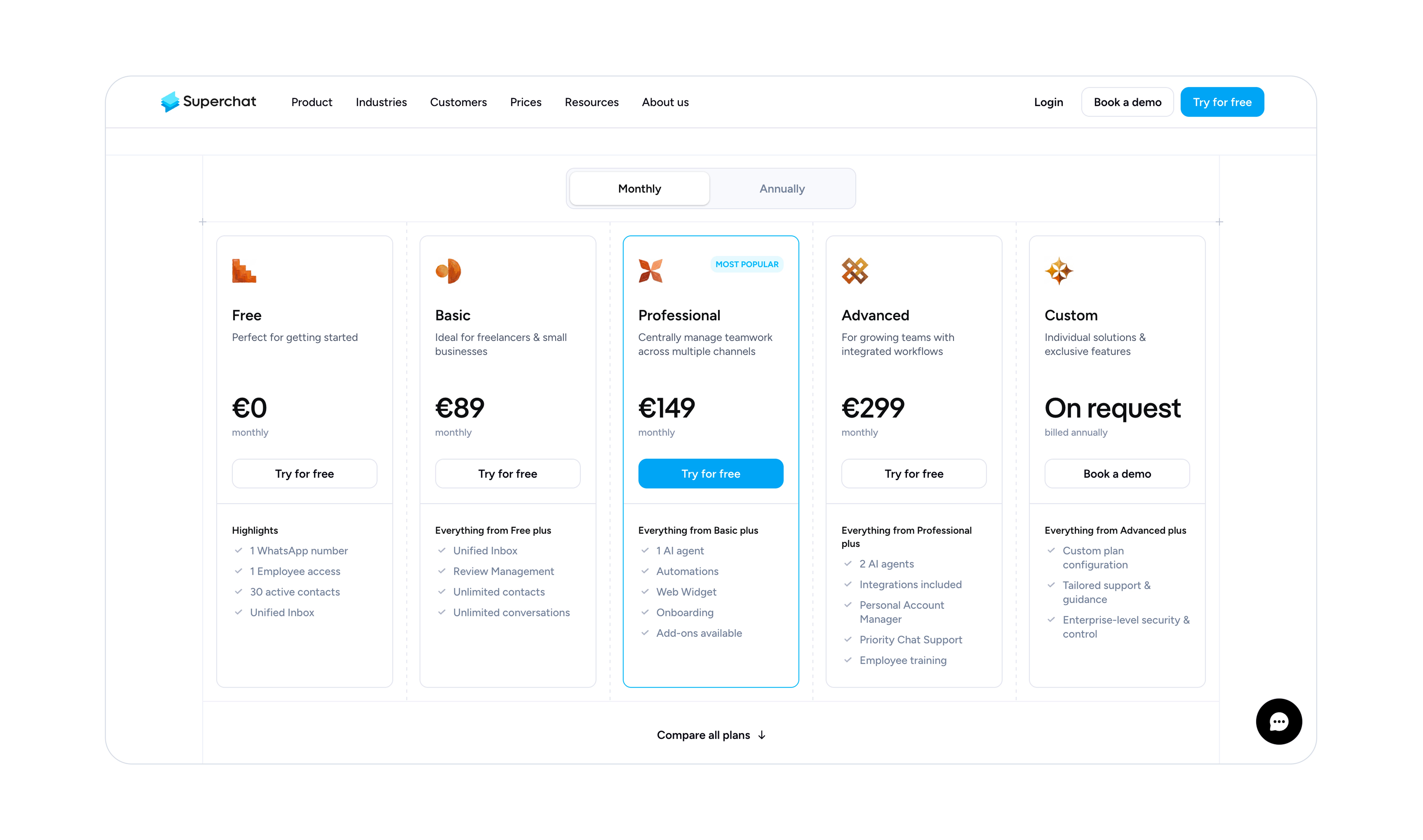
Early-stage B2B SaaS startups tend to start with flat-fee subscription pricing: a fixed, recurring monthly price for a set of features.
And it makes sense. You don't have enough usage data yet and your main focus should be acquisition. A flat fee is easy for potential buyers to understand, which makes selling easier in the early days too.
Add value metrics that drive expansion
The magic of SaaS happens when expansion revenue outpaces churn. Once more users upgrade than cancel or downgrade, growth starts compounding and becomes truly exponential.
Your pricing strategy should account for that expansion potential as you grow.
With just flat-fee subscriptions, expansion can only happen when a user upgrades to a higher tier or adds new premium features. This usually involves fairly manual upselling from sales or customer success. That's why you want to add value metrics that scale organically as customers start to use your product more:
Seat-based: Pricing is based on access. The more users added to the product, the higher the monthly recurring revenue. (Example: Pipedrive)
Usage-based: Pricing is based on activity. The more API calls, messages sent or payments processed, the higher the monthly recurring revenue. (Example: Stripe)
Outcome-based: Pricing is based on positive impact. The more tasks an AI agent handles with a positive outcome, for example resolving a support ticket, the higher the monthly recurring revenue. (Example: Fin)
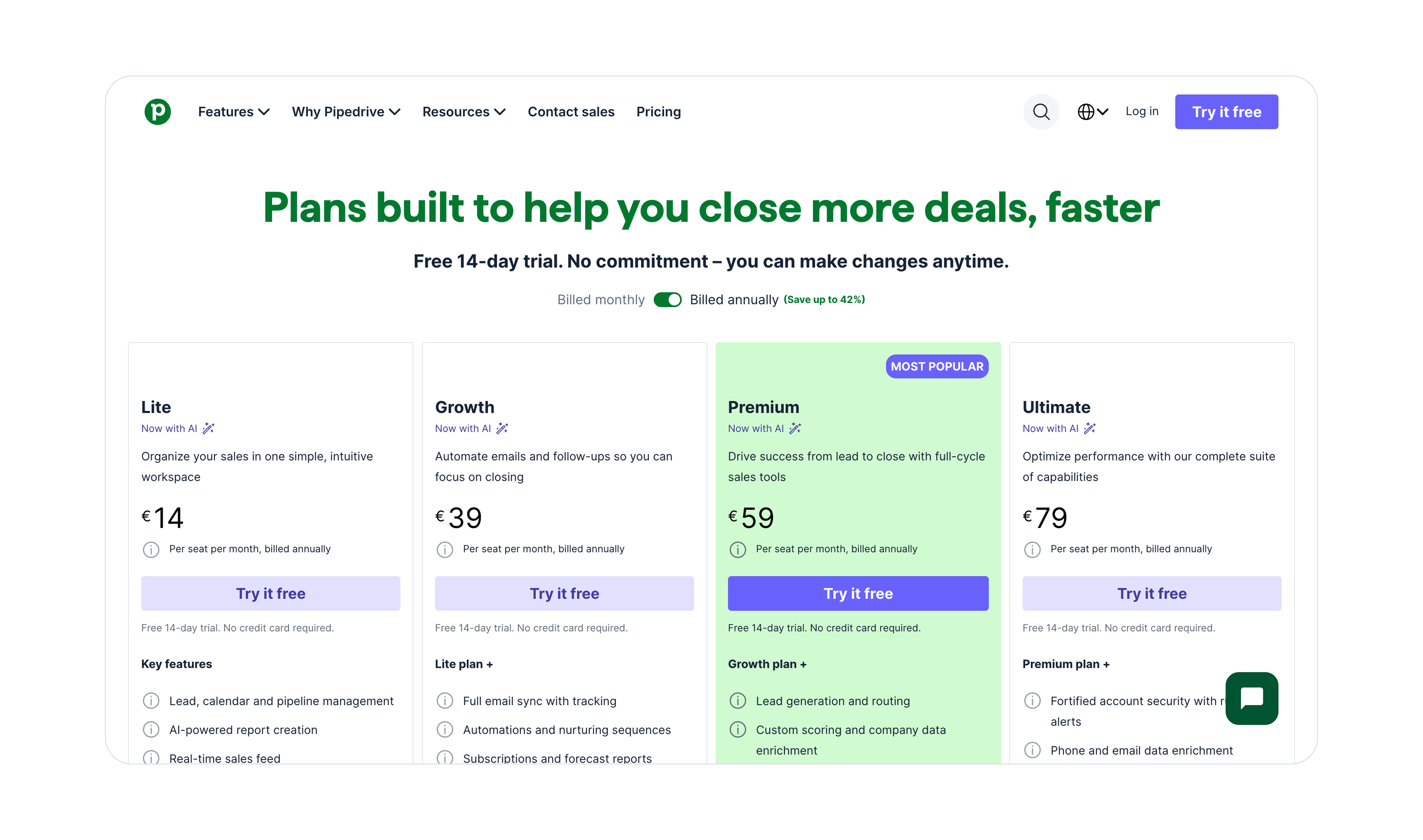
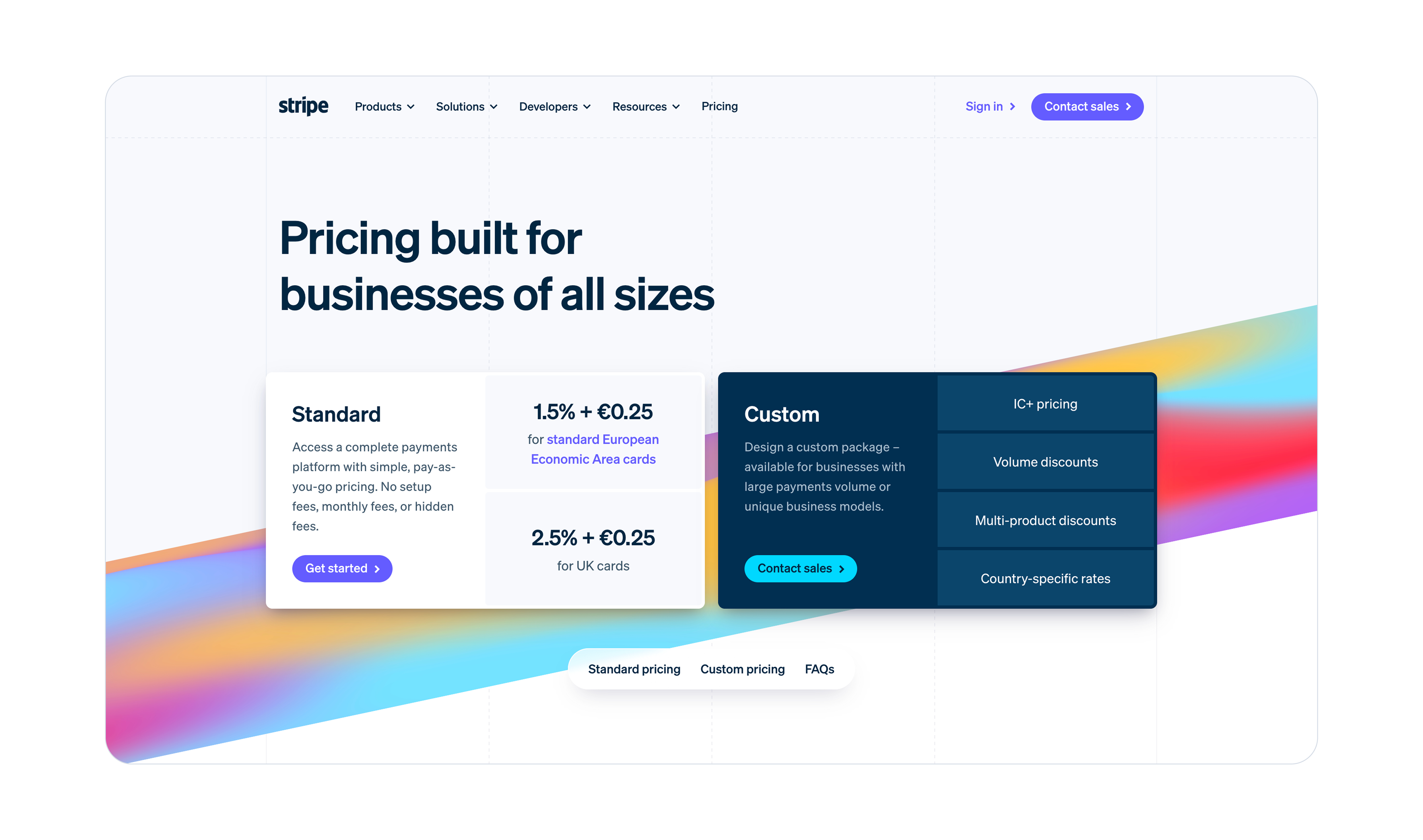
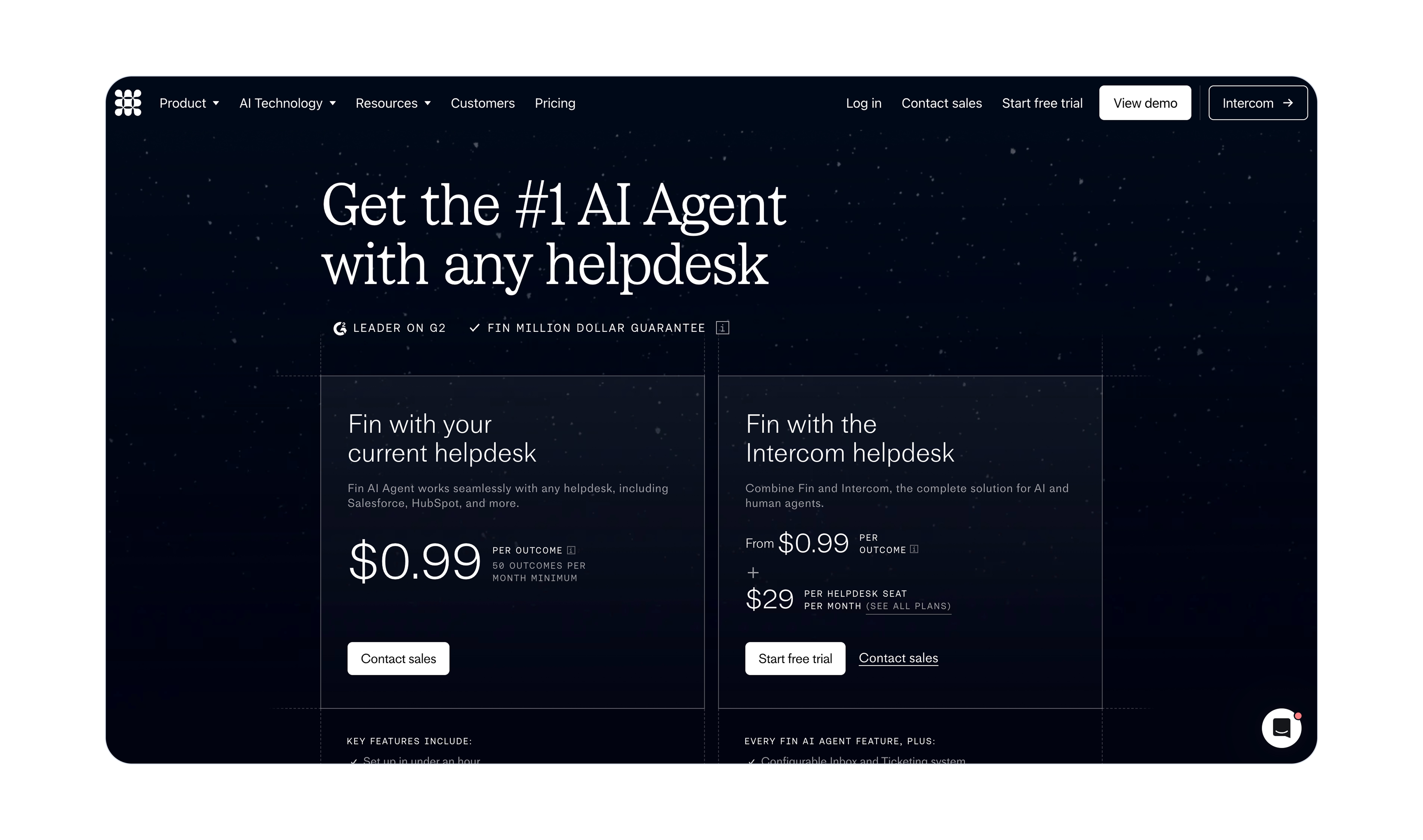
In reality, most B2B software companies run on a hybrid approach. They combine two of the four named pricing models.
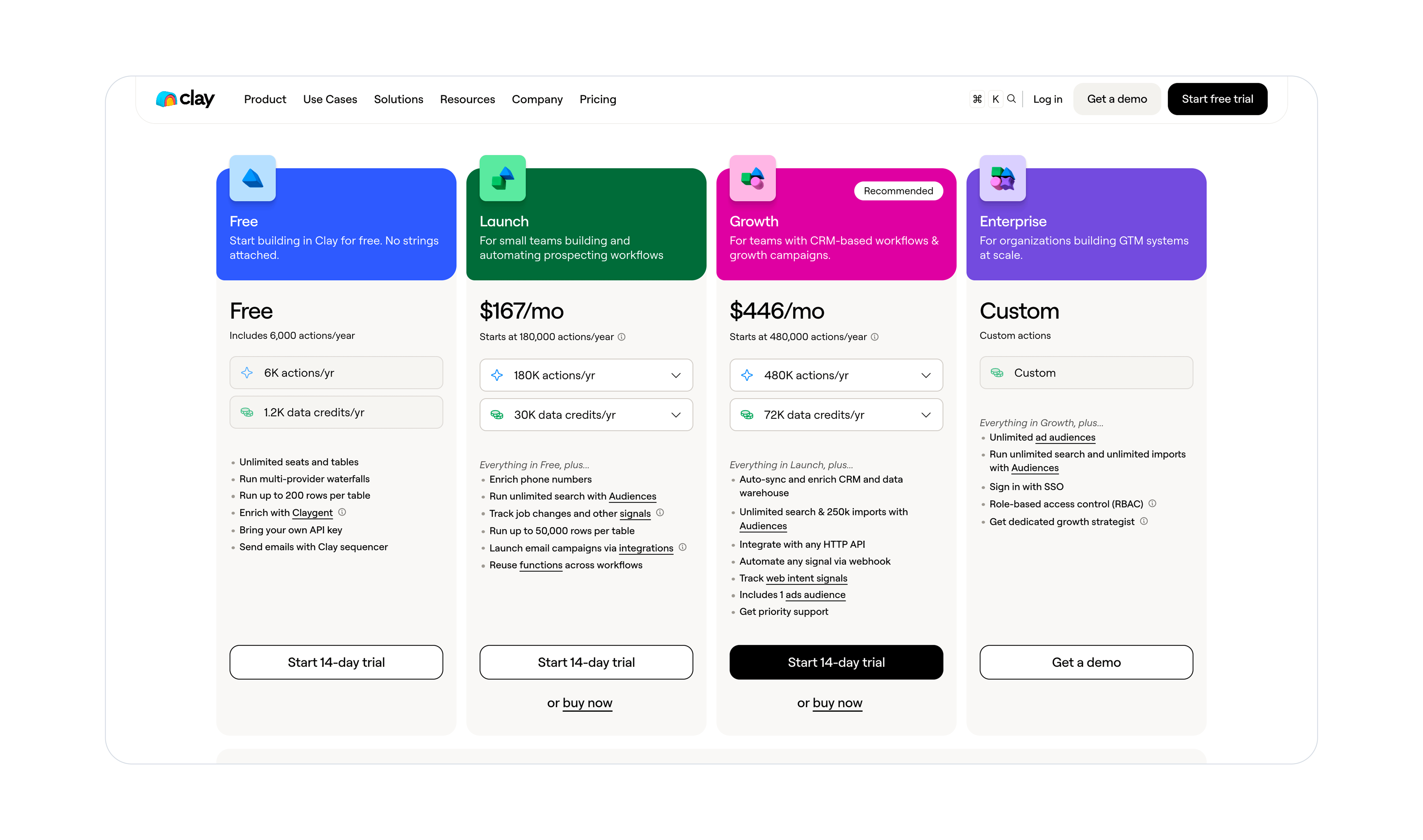
💡 Tip: Using a hybrid model gets you the best of both worlds: flat-fee subscriptions provide predictability, while a secondary value metric (seat-, usage- or outcome-based) fuels organic expansion as customers increase their product usage.
4 signs it's time to review your pricing
Improving your pricing often has a bigger impact on your growth than improving acquisition. You just need to know when the time is right:
You’ve stuck with flat-fee pricing for too long: Flat fees keep things simple: predictable for you, transparent for your customers. A great starting point. But as you grow and gather more usage data, you should layer in new value metrics to drive expansion organically.
You are losing too many deals because of your pricing: This usually comes down to a mismatch between value and price. Aim to lose around 20% of deals to pricing. This filters out prospects who lack the budget or don’t see your product’s value. They wouldn’t have made great customers anyway. Your alarm bells should ring if that rate is 40% or more.
💡 Tip: The insights you need are likely sitting in your call recordings. Tools like Fathom can pull them out in a structured, usable way.
Your price is too low: If you don’t receive any pushback on your price, that’s a strong indication in itself. You are probably not charging enough. An often-cited 2003 McKinsey study found that a 1% price increase generates an 8% boost in operating profit for S&P 1500 companies on average. A low-hanging fruit worth considering.
You are charging based on the wrong value metric: If you charge based on user seats but your seat count isn’t growing, something’s off. Pull your internal data. If token spend on your automation feature has skyrocketed, for example, it’s a sign you should shift toward usage-based pricing.
Publish your pricing
Most B2B buyers prefer a rep-free discovery process. So don’t hide your pricing behind a sales call. Use it as a competitive advantage instead.
Market awareness
We’re now building the bridge between defining your marketing strategy and actually bringing it to life in the market.
If you know a thing or two about marketing, you’re probably familiar with the funnel concept: a segmentation approach that slices the buying journey into different phases to ensure more effective communication.
While I don’t have a problem with the underlying segmentation approach, I think many people, when talking and thinking about the funnel, spend way too much time choosing the right channel instead of choosing the right message.
Every prospect in your market sits at a different awareness level. Some don’t know they have a problem, while others know everything about your product, and the only thing standing between them and a purchase is a well-timed offer.
📝 Note: Your task is to define how you want to speak to each awareness level: how do you hook prospects and move them all the way down to being ready to buy? Marketing channels are simply the vehicle for your message. While some channels suit certain awareness levels better, most can handle several.
📚 Reading Tip: Most B2B SaaS marketers think channel-first. But they should think copy-first. My guide on awareness levels shows you exactly how to do that, with seven concrete examples you can apply right away.
8 proven B2B SaaS marketing tactics for generating revenue
You’ve got your marketing fundamentals in place and now it’s time to take them to the market. This list gives you an in-depth look at state-of-the-art B2B SaaS marketing tactics, for founders and executives with high and low budgets alike.
Build a B2B SaaS website that converts
Your website is your most important marketing channel. Every play you run eventually leads back to it. That’s why it should be the first thing you look at.
When someone lands on your website, they already know they have a problem and that solutions like yours exist. Your main job is to prove that your product is the best option by making your marketing fundamentals shine.
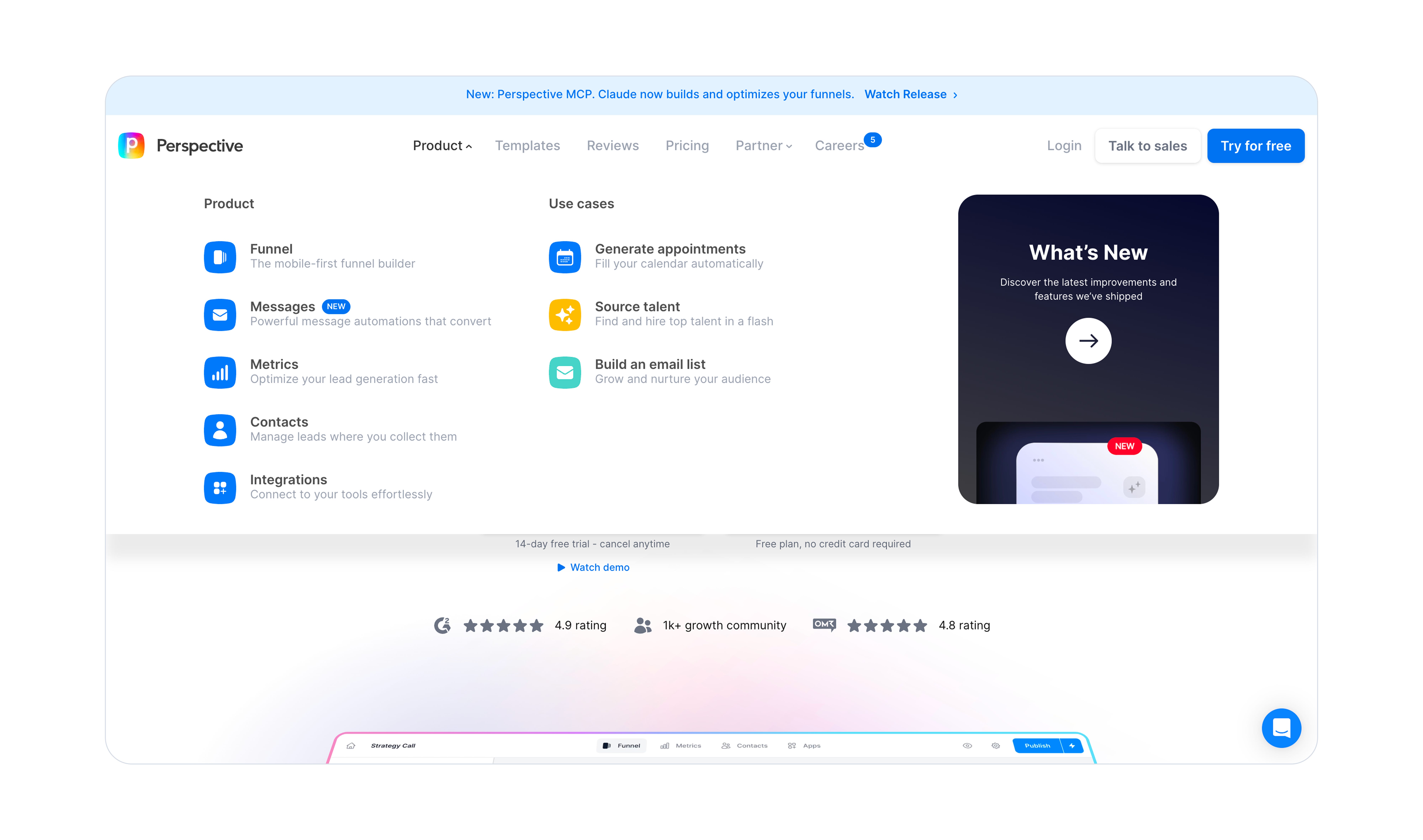
Homepage
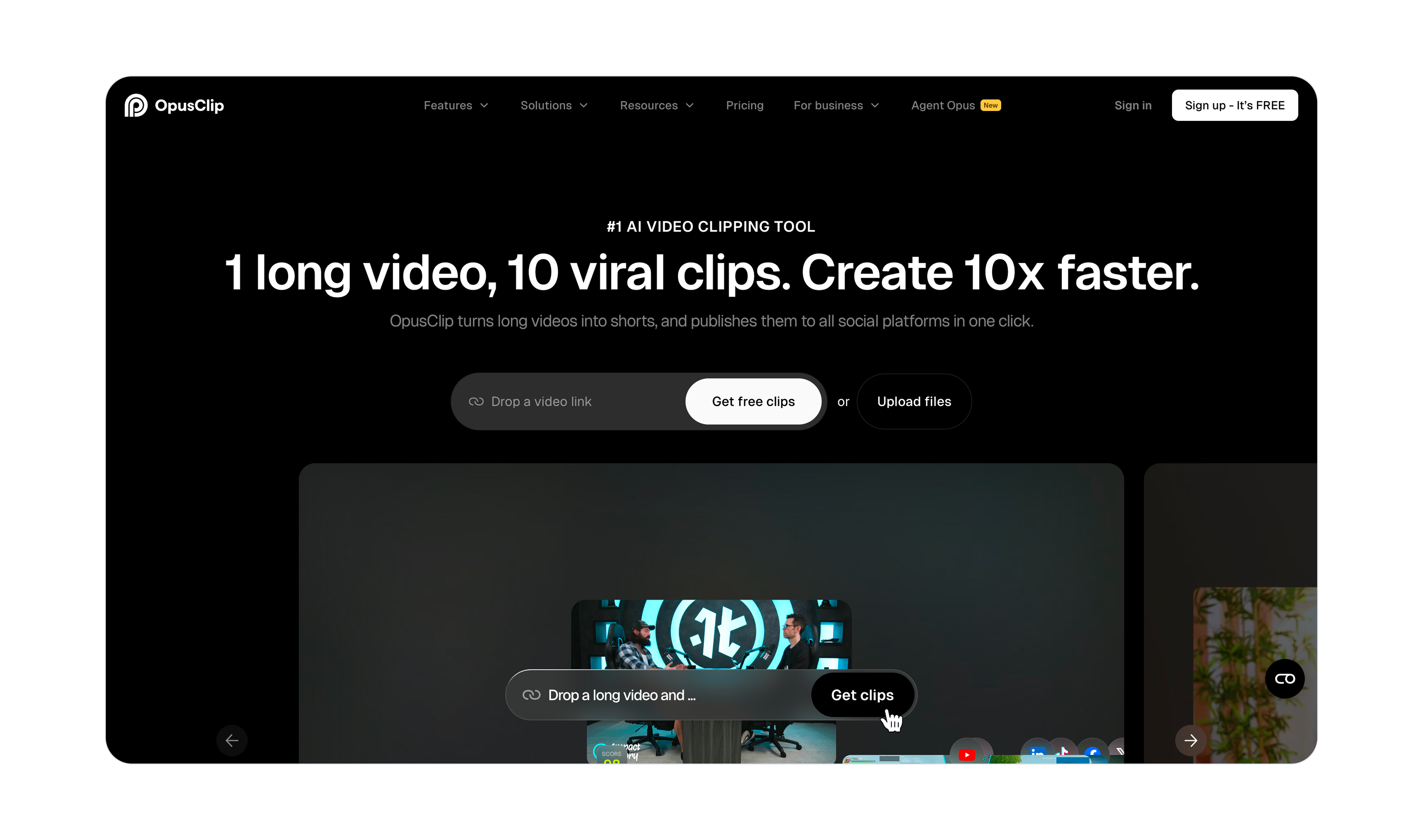
Your homepage is the most important page on your website, and the hero section (the section visitors see without a single scroll) is the most critical part of it. Simply because the majority of your website visitors won’t scroll any further than that.
What belongs here, front and center, is your value proposition from chapter three. Your concrete business outcome is your headline, while your sub-headline briefly answers the question of how your SaaS product achieves the promised result.
What follows is a clear call-to-action that directs users into a demo call or into a free trial. This CTA should be accompanied by a testimonial banner that includes customer logos or other social proof, such as standout reviews.
The rest of your homepage should explain everything from your hero section in more detail.
It is as simple as that.
📝 Note: The key to your success here is your ability to write a compelling headline that makes signing up for a demo or free trial a no-brainer!
Features
Every value proposition needs an explanation. How exactly does your product work? What’s the mechanism behind it? Your product and feature pages are exactly the place to answer that.
I recommend separating this product section into feature explanations and use cases. One critical aspect of your website is to spark the imagination of your visitors fast, so they think: “Wow, that’s a very useful application for my business!”
Testimonials
Every value proposition needs proof. How do customers use your product and which tangible business outcomes have they achieved?
The more, the better. Extend your customer testimonial section step by step and try to structure each piece based on the following variables:
Use case
Industry
Position
Company size
Software categories you integrate with
Your goal here is to maximize specificity and thereby credibility.
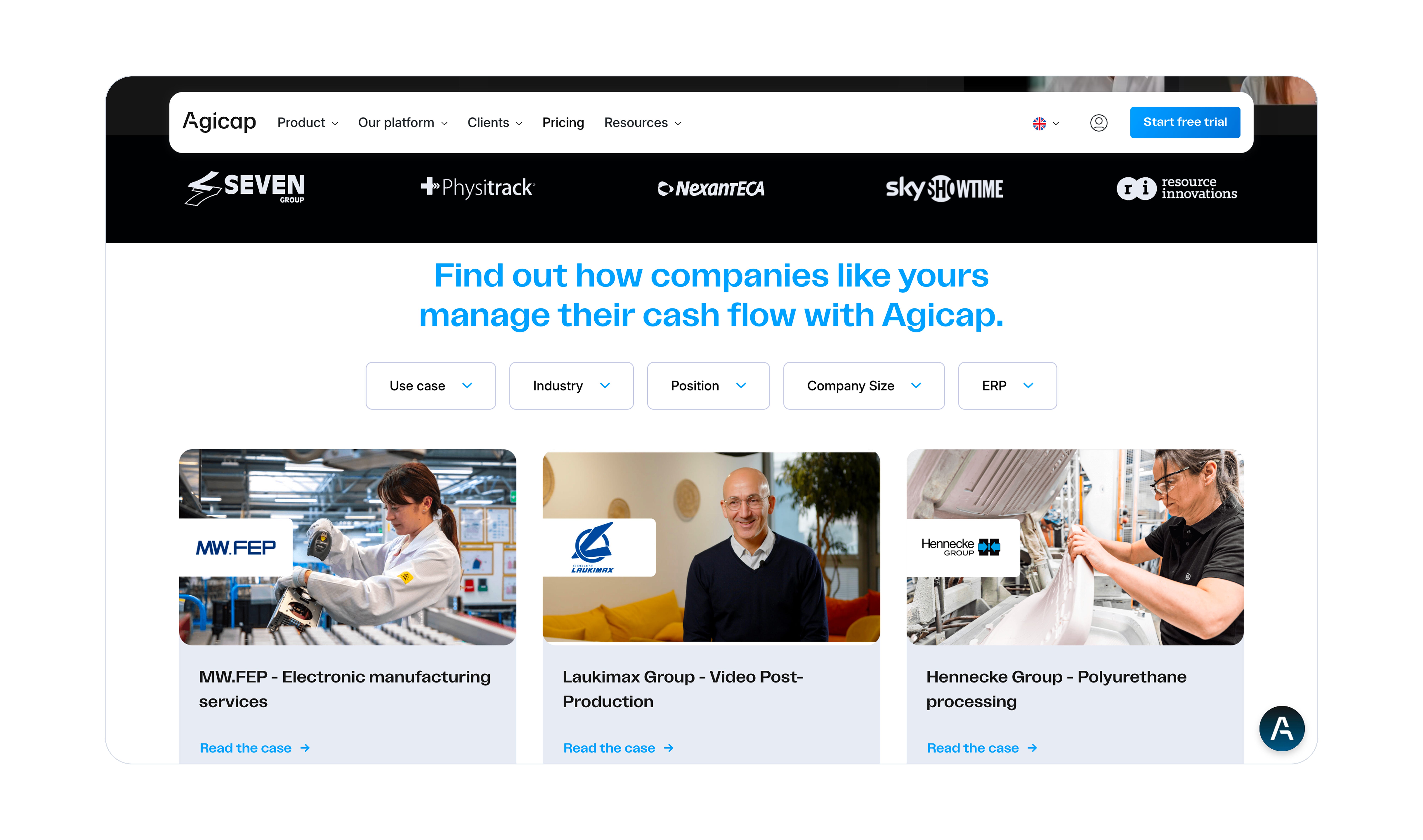
💡 Tip: Written testimonials are good, video testimonials are better. Video assets are usually perceived as more trustworthy and they double as content you can reuse in ads.
Pricing
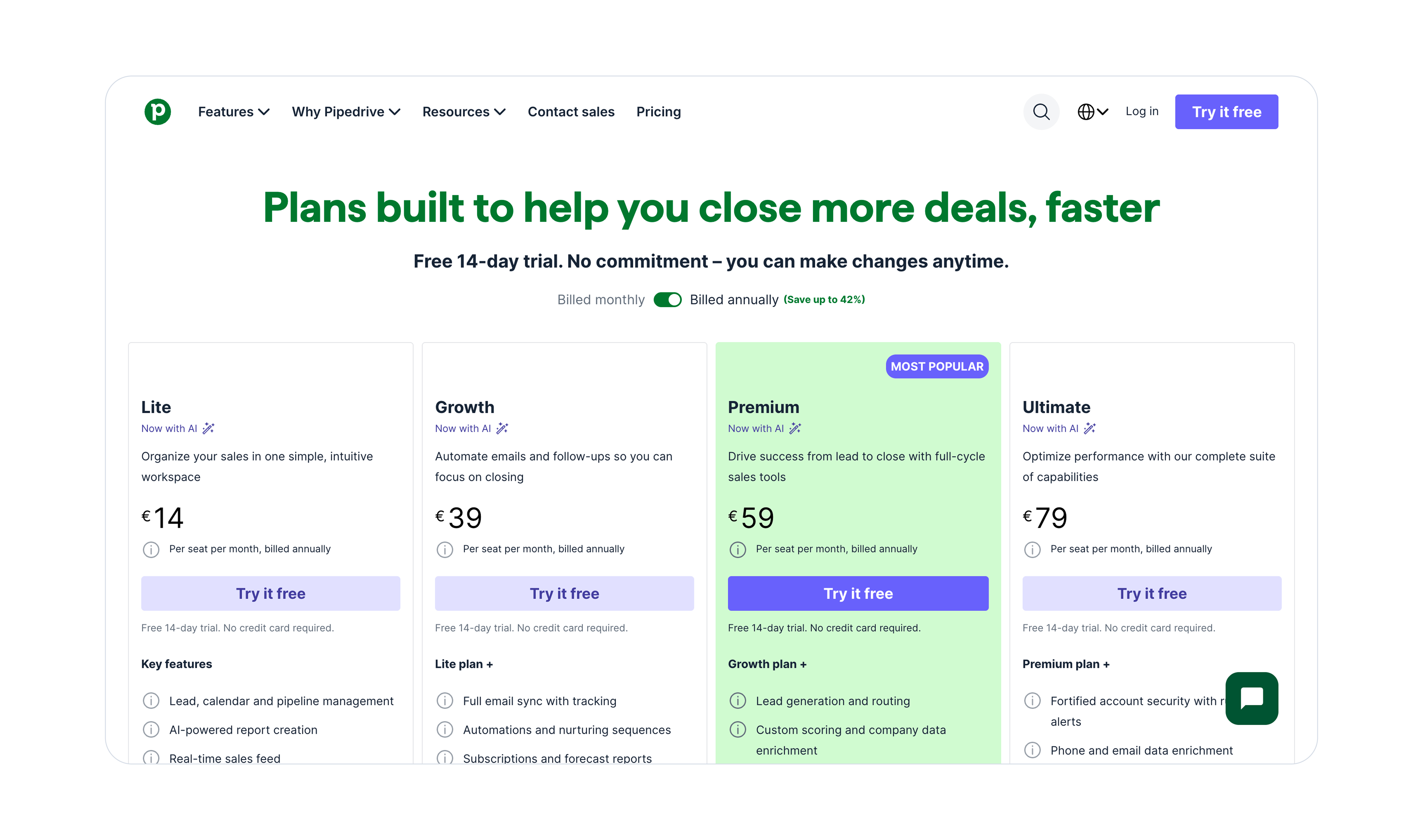
Right after your homepage, pricing is the second most important piece of your website. It plays a crucial role in the buyer’s journey. Get it right and your conversion rate increases: more demos and more free trial signups.
📝 Note: A good pricing page reinforces your value proposition and provides clarity about your offer.
But what does a good pricing page look like? Emily Kramer from MKT1 provides us with an in-depth breakdown. Some of the most important things you should consider:
If you plan to include different pricing plans, three is your magic number.
Highlight a middle plan as the “Most Popular” to reduce decision fatigue and to steer users toward your most profitable tier.
Lead with your value metric and make it obvious to prospects what your pricing is based on.
Help prospects estimate how much they'll pay with a calculator tool.
Your pricing page should be included in your website's main navigation so that prospects can find it easily.
Address objections early on by providing an extensive FAQ section.
Include a discount on annual subscriptions to make the offer more compelling.
Divide your pricing page into an easy-to-scan hero pricing part and a longer comparison table below, for people who need more context on the features included.
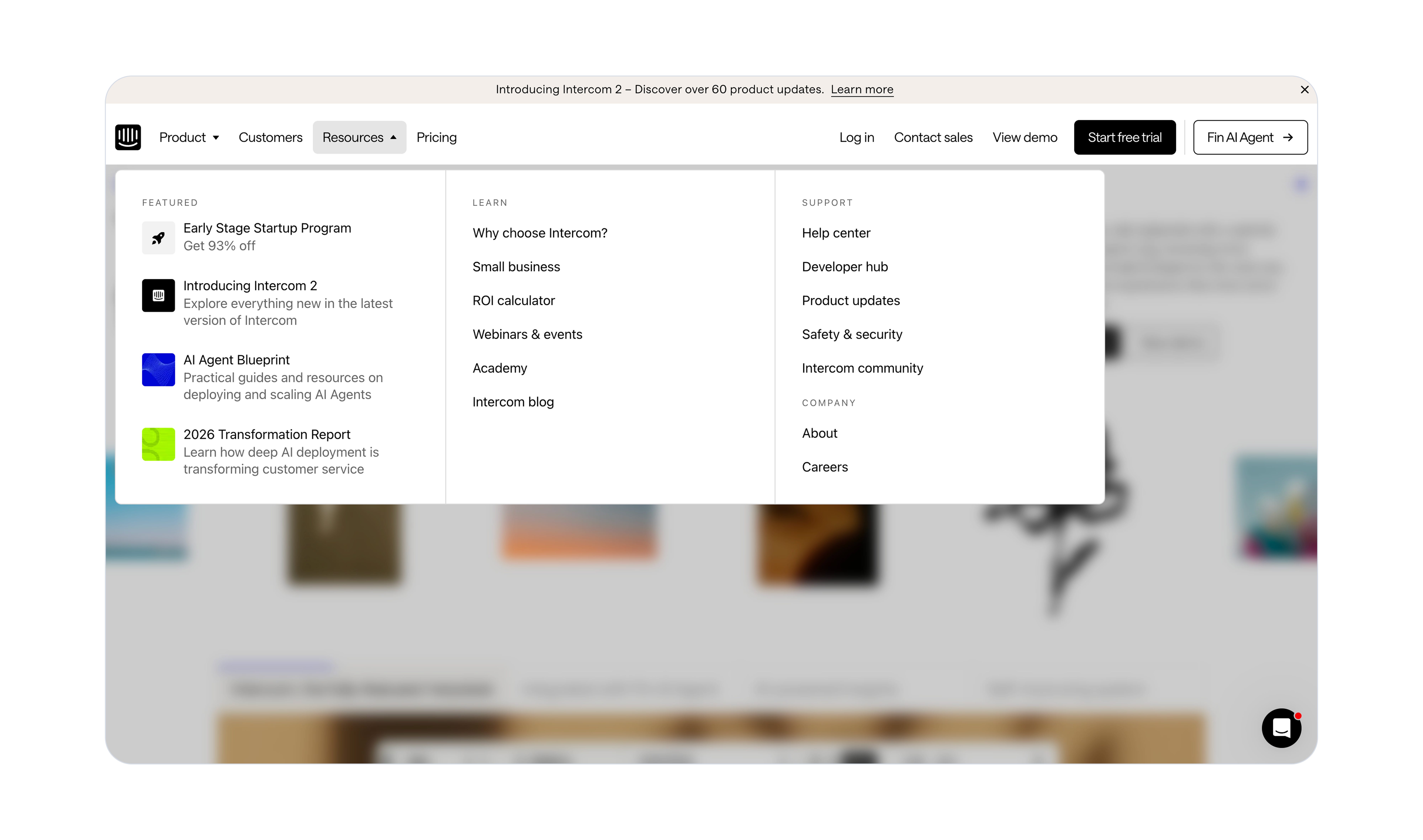
Resources
The resources hub includes additional materials to help prospects make buying decisions and to educate active users on how to better use your product. What I love to see here is a “Why choose my product?” part because it’s a sub-page dedicated to the most obvious question your website visitors will have.
What's also present here is your SEO estate, usually a blog or something similar, for articles to appear on web and AI searches.
About page
People buy from people, not businesses.
Add an “About You” or “About Us” section that shows prospects who’s behind the scenes doing the work every day. Your story builds an authentic, trustworthy brand that will boost your website’s conversion rate.
Use proprietary data to rank in Google and AI search
Search engine optimization (SEO) refers to the process of creating original, helpful and user-first content in order to rank on the result pages of search engines like Google or Bing for keywords that align with your business’s goals.
With AI search, a new term has emerged: generative engine optimization (GEO). Its goal is to get your content cited as a source when AI Overviews, ChatGPT or Claude answer a question. According to Google, GEO and SEO closely align, with the same core best practices applying to both.
And your SaaS product offers a competitive advantage in one of the most important ranking factors for both classic and AI search.
📝 Note: SEO and GEO are essential drivers of organic growth for your B2B SaaS product. Results can take months to show up but once the traffic starts rolling in, it’s basically free.
Turn usage data into original content
SaaS businesses sit on a goldmine called usage data. And this usage data can be turned into expert content like reports or analytics. For example, a landing page tool for marketing agencies has tons of data on relevant metrics, such as conversion rates.
Original content ranks better on Google
In its guide to creating helpful content, Google lists this as the first question creators should ask about their content: "Does the content provide original information, reporting, research, or analysis?"
Proprietary data plays a big role in search rankings and research backs this up. The top three search results tend to be more original than results four through ten.
Still, even those top pages are only moderately original, with a median of just four numeric data points found nowhere else.
💡 Tip: Ranking high on Google with proprietary data might be easier than you think. Research shows that the top three ranking pages include a median of just four original numeric data points, and longer articles only perform better in a handful of cases.
How to get proprietary data cited in AI search
Proprietary data can earn you citations but just owning the data is not enough. Kevin Indig from Growth Memo provides us with insights into how to structure content for GEO success:
AI rewards specificity: Adding dates, precise statistics, a particular methodology or a named comparison increases the likelihood of being cited.
AI reads like a busy editor: The first 30% of a page is what AI focuses on the most. Include your strongest numbers right at the beginning to increase the likelihood of being cited.
AI loves benchmarks: Benchmark reports that support buying decisions by answering concrete comparison questions are cited disproportionately in AI searches.
💡 Tip: Original data alone won't guarantee citations in AI searches. Kevin Indig's research suggests that structure matters too: front-loading your articles with specific numbers, dates and methodologies makes them easier for ChatGPT and others to extract and cite.
Build a founder-led brand on LinkedIn and Substack
Next to SEO and GEO, social media is the second pillar of organic growth and a tactic that every beginner should incorporate.
LinkedIn is the obvious choice since it’s the biggest social media network for professionals with currently over 1.2 billion members worldwide. Substack, on the other hand, offers an interesting alternative as a network that has seen rapid growth in recent years, currently sitting at over 5 million active paid subscriptions.
Two of Substack’s biggest appeals are its dedicated newsletter and blog features. The company has also started moving toward being a social media network, adding new opportunities for creators to be discovered.
For LinkedIn, it’s the other way around: the company started as a social media network for professionals and later added a newsletter feature on top. From an SEO perspective, one of LinkedIn’s biggest advantages is that short-form posts can rank directly on Google.
💡 Tip: LinkedIn and Substack offer similar features and advantages for B2B SaaS founders. I recommend sticking to one in the beginning to understand the individual algorithm and what type of organic content drives meaningful engagement.
Post from personal profiles, not company pages
Personal profiles have a 63% higher engagement rate on average than company profiles on LinkedIn. So in order to be successful, you should post from your personal profile and keep the company profile in a supporting role.
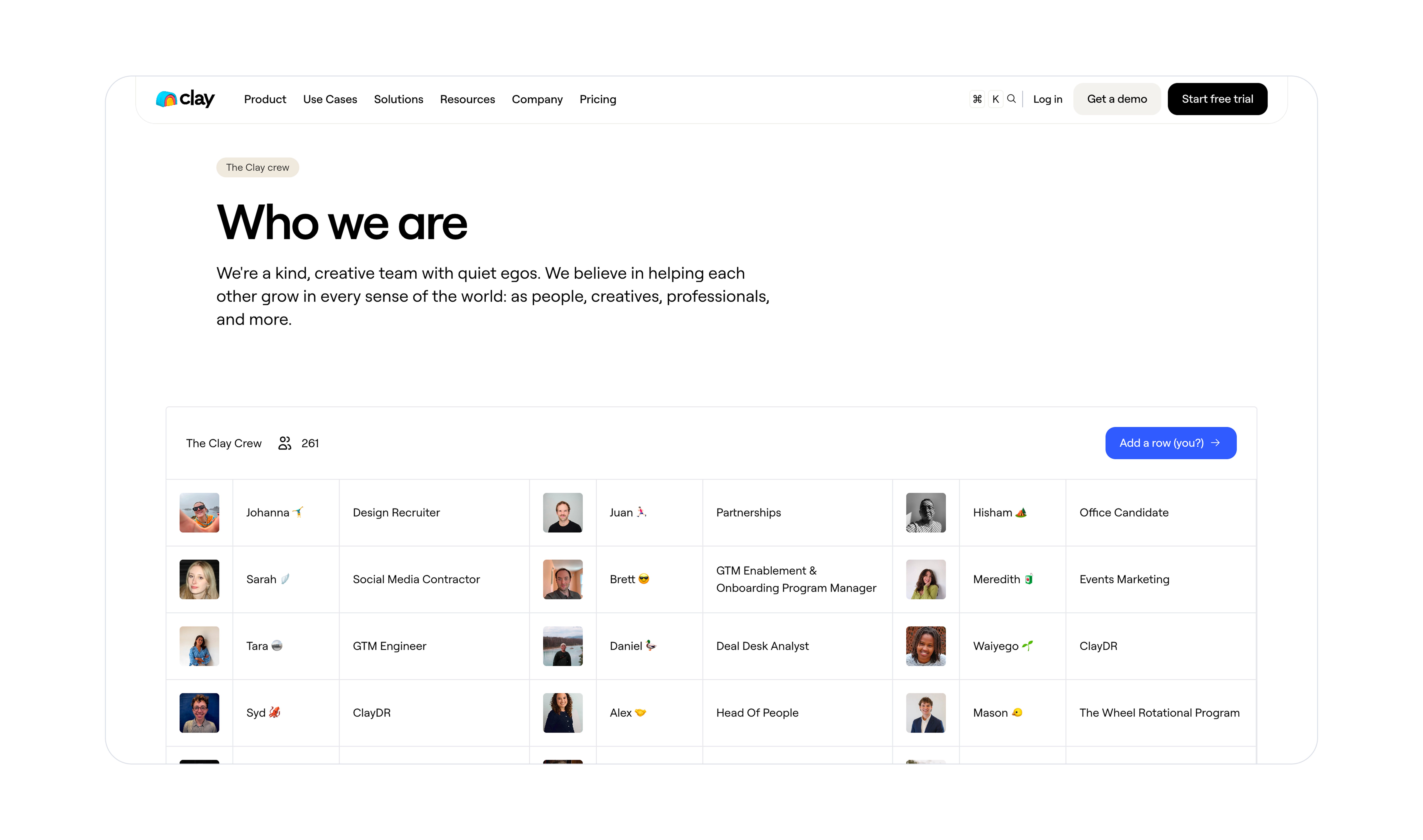
Heavy B2B SaaS hitters like Clay ($100M+ ARR) build entire LinkedIn growth motions on top of their employee profiles. They leverage the number of employee profiles, since LinkedIn throttles reach when you post more than once a day.
Nurture leads with email and WhatsApp newsletters
With every free trial signup, demo request or newsletter subscription, your warm email list grows. And this email list is very valuable because, once a user opts in, it becomes a cheap marketing channel.
In the beginning, you want to focus on two content clusters:
Acquisition-related: Emails for leads who know your product exists but aren't yet convinced it's the best option. In a sales-led growth motion, the goal of these emails is to move prospects toward booking a demo call with your sales team. Focus on:
Customer testimonials
Case studies
Comparisons
Discounts
Objection handling
Expansion-related: Emails for customers who have started using your product. The goal of these emails is to drive adoption and increase expansion revenue. Focus on:
Feature intros and updates
How-to guides
Webinar invites
Referral programs
Troubleshooting common problems
📝 Note: With free trials and a product-led growth motion, acquisition and expansion emails get mixed. Prospects start to use your product but are not paying customers yet. Your goal becomes activation: educating users about your product and sending timely offers based on usage data.
Email newsletter benchmarks for free trials
Turning free trials into paying customers is one cornerstone of cost-efficient SaaS growth, equally important to seasoned businesses and beginners. Email marketing plays a crucial role here, which is why we want to take a closer look at relevant benchmarks.
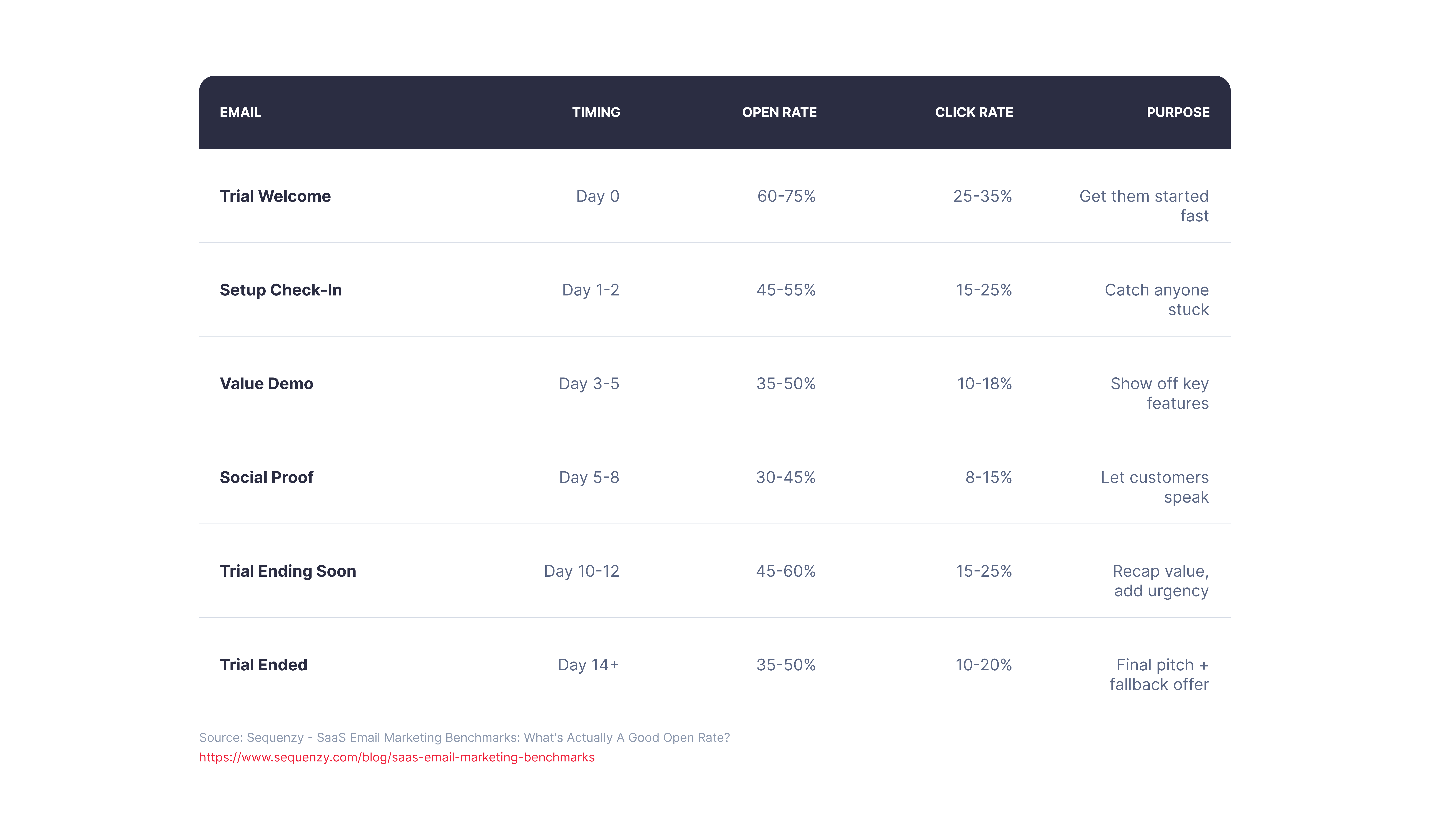
These benchmarks will help you assess the health of your content: “Is my marketing copy good enough to make the majority of free trial users open and click my emails?”
But open and click rates shouldn’t be your leading metrics. Free-to-paid conversion rates should be instead: “Are my emails positively influencing revenue growth?”
Taken from chapter three, here's what good conversion rates look like:
Free trials without a payment method needed upfront → 8%
Free trials with a payment method needed upfront → 30%
Reach premium customers with WhatsApp newsletters
Much of the world uses WhatsApp daily and businesses have discovered it as an additional communication channel, as consumer preferences shift toward messaging.
In my opinion, it’s a double-edged sword that should be layered on top of already successful email marketing campaigns. Double-edged because, on one side, WhatsApp promises high open rates above 90%, since the messenger is used so frequently.
On the other side, WhatsApp is a very personal space for communicating with friends and family. Businesses entering that space without asking for permission or with irrelevant content risk damaging their brand, even more than they would with bad email marketing. Conversely, businesses that play it right have a very potent channel for customer loyalty at hand that almost no SaaS is currently leveraging.
💡 Tip: Use WhatsApp as a channel for customers with a high lifetime value. An exclusive “premium club” for power users who want to have access to new features earlier than anyone else, for example.
💡 Tip: If you want to see state-of-the-art WhatsApp newsletters, look at ecommerce companies. Consumer brands typically run highly developed expansion campaigns and were among the first to adopt WhatsApp. They offer good examples of how to structure these campaigns, from message frequency to how the marketing copy should read. Some of my favorite examples include the brands Jack Wolfskin and L’Oréal.
Implement a referral system
If you build a product that people love to use, they start to talk about it. Your task is to build and communicate an easy process for turning those recommendations into new paid users. And referred customers are worth a lot! A study from Wharton finds that referred customers have a 16% higher lifetime value and an 18% lower churn rate.
📝 Note: Only implement a referral program once you see healthy adoption and retention numbers. Adding a referral program on top of a product without product-market fit will only accelerate churn.
The most straightforward way to market a referral program is a prominent banner inside your SaaS tool. Popular incentives include:
Discounts on current paid plans
Free credits for automation and AI features
Gift vouchers
Finding the right incentives should come down to testing but a good starting point is your ACV. Work backward and choose a headline number that every user sees, defined as a percentage share of your ACV.
As a general rule: the higher your ACV, the higher the expectations for rewards:
If your ACV is around $200-$600, referrers expect a reward between $105 and $345
If your ACV is around $1K-$4K, referrers expect a reward between $420 and $1.7K
If your ACV is around $10K-$30K, referrers expect a reward between $2.1K and $4.2K
💡 Tip: Make referral programs two-sided by offering incentives for the referrer and the referred to increase sharing and signup rates at the same time.
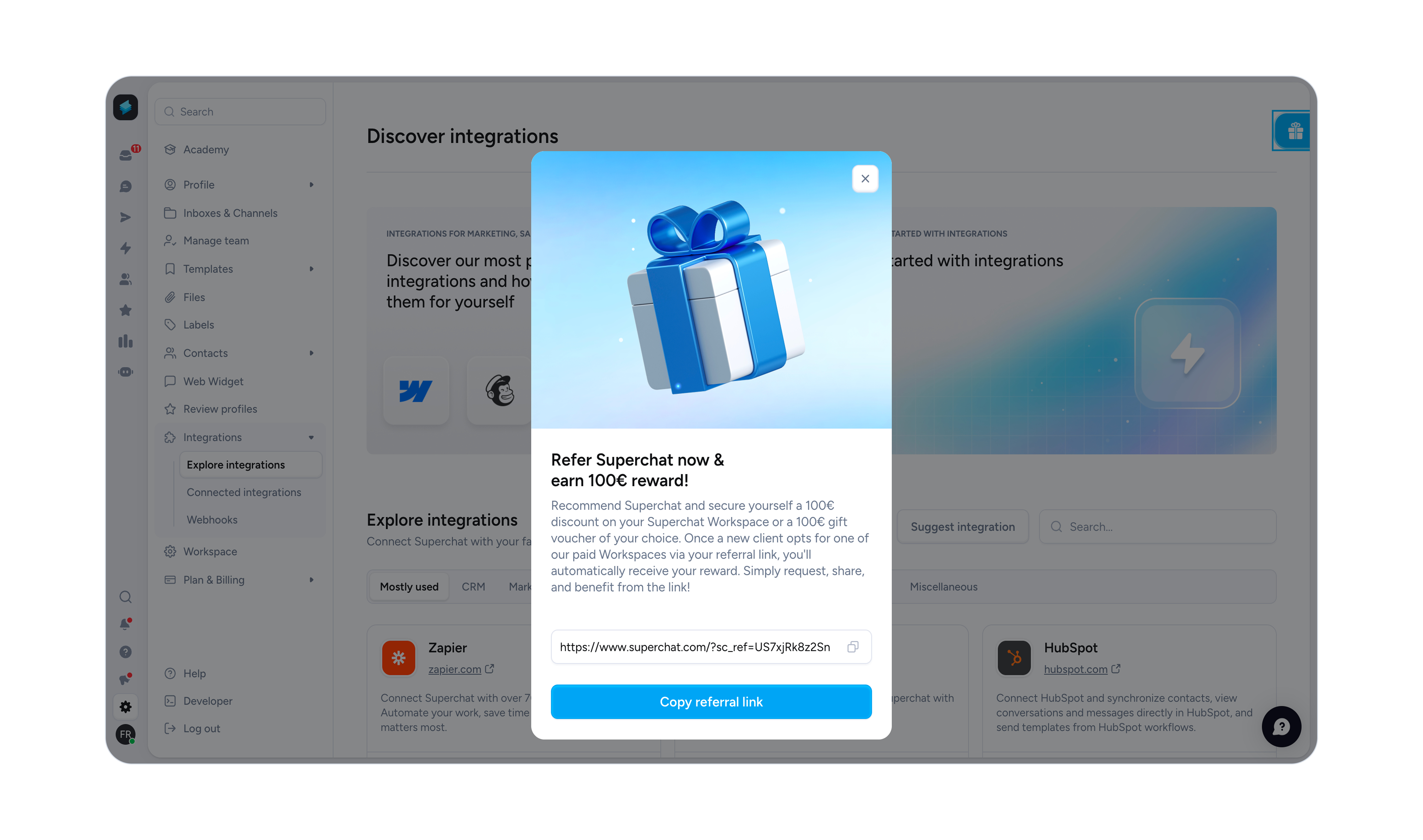
📝 Note: Ensure that referrals are traceable. Every link that one of your customers shares should include UTM parameters for attribution purposes.
Benchmarks for referral programs
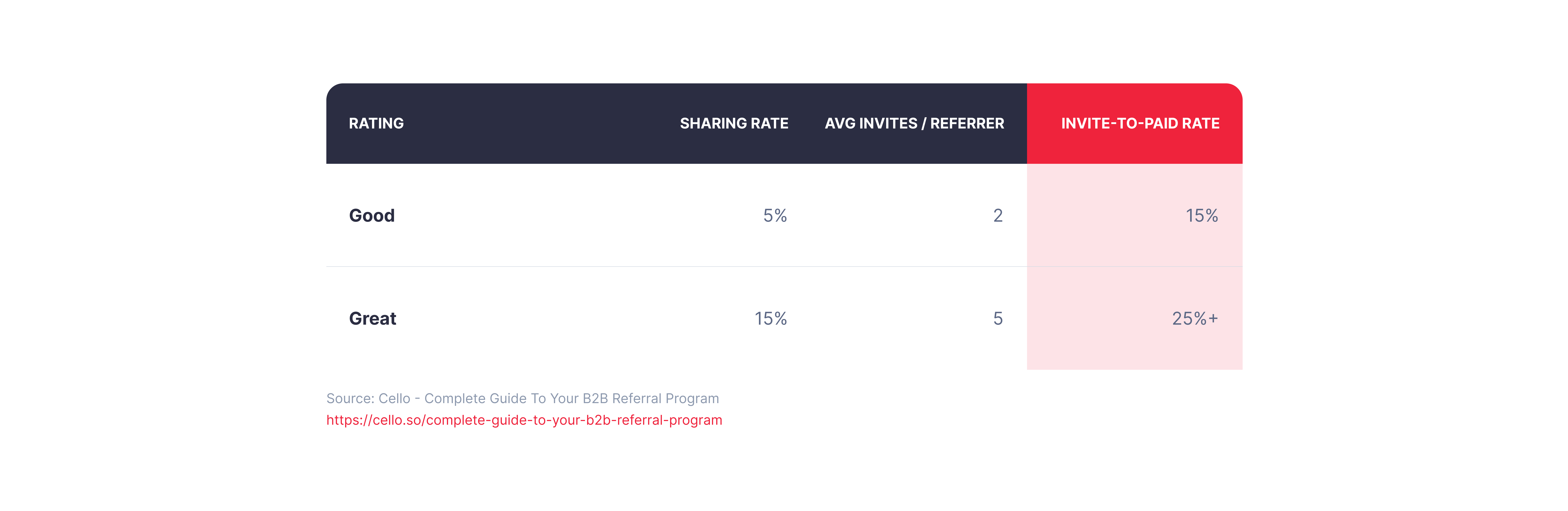
What does a healthy referral program look like for B2B businesses? Our friends at Cello help us answer exactly that.
Build growth loops beyond referrals
A working referral program is such a powerful growth motion because it functions as a loop. Users refer others, who then refer new users of their own. A self-sustaining system that compounds like interest.
The more growth loops you deploy, the better. Referral programs are the standard but there are other options for you to explore.
Let’s take an example loop from SurveyMonkey:
A user takes a survey and signs up on a SurveyMonkey landing page.
The user creates a survey.
The user sends out the survey to collect responses.
Those who finish the survey have the opportunity to sign up for SurveyMonkey.
📝 Note: You have a growth loop opportunity every time users create something with your product and share it with people who are relevant for your business.
Running successful growth loops, outside of referral programs, is easier for B2B SaaS businesses with low average contract values or B2B/B2C hybrids, such as SurveyMonkey, Notion and Dropbox. They market to a broader audience, which increases the pool of relevant people and the compounding potential of each loop.
Design an onboarding flow that activates users
Easy value discovery is key to your SaaS success. Users who find their “Wow!” moment fast are more likely to turn into long-term paying customers. What makes or breaks success here is the onboarding flow.
The onboarding flow is an in-product feature that guides users toward their first milestone.
📝 Note: A milestone should reflect a certain action inside the product that clearly distinguishes users who activate into paying customers from users who don’t, based on your internal data.
📝 Note: It's common for B2B SaaS businesses to support new customers with dedicated customer success managers. Still, a clean in-product onboarding should come first. It makes your managers' lives easier and it increases the odds of users activating into paying customers without any human touch.
Rules for designing an effective onboarding flow
Best practices for B2B SaaS onboarding flows include:
Lead with your value proposition: The first thing users should see inside the onboarding flow is your value proposition. Remind them of what they get by completing the onboarding. From a copy perspective, your value proposition is a much stronger conversion driver than a generic headline like “Start now with product XYZ”.
Create a frictionless path toward value: Skip bloated product tours with dozens of different tooltips. Your onboarding has one goal: get as many users as possible to achieve the desired milestone.
Personalize the onboarding experience: As with many things in marketing and life, personalization creates specificity, and specificity creates relevancy. Users expect a personalized experience. Ask them what they want to do with your product and adapt the following onboarding steps accordingly. Don’t just assume based on the given firmographics.
💡 Tip: In some cases, you might want to think about skipping the onboarding flow altogether. For example, a very tech-savvy audience like engineers might prefer to start directly inside your product with all features available.
Leverage the sunk cost fallacy: The sunk cost fallacy is our tendency to continue with things that we have already invested time and effort in. To increase your onboarding flow’s completion rate, frontload small, effortless tasks instead of presenting one big to-do. At the same time, show progress throughout, using a progress bar or a simple checklist, for example.
💡 Tip: The sunk cost fallacy effect can also boost the performance of your free trial emails. Any significant value a user created during their free trial and is now about to lose is a selling point.
📝 Note: Do not try to artificially create or amplify the effect by adding onboarding steps that aren’t adding any value. Users might get exhausted or find this behavior spammy, which leads to higher drop-off and churn rates.
Offer rewards: Increase completion rates by offering product-related rewards, such as extra free users or free credits.
Offer support: Some users prefer direct support regardless of how good your onboarding flow is. I recommend implementing a chat option with a well-trained AI agent that escalates to a human if necessary. In this way, support is easier to scale, as more and more users go through your onboarding flow.
Work with templates: If you want users to create something during the onboarding process, offer templates to reduce friction. Templates are also a great opportunity to demonstrate social proof. Rank them based on popularity and add a note saying “Used by X peers in your industry”.
Make it easy to invite new users: Many B2B SaaS products are intended to be used by teams, so activation can only happen if multiple seats are inside the workspace. Asking users to invite coworkers at the end of an onboarding flow feels natural. It’s the next logical step after configuring the product. More active users also increase the stickiness of your product, as well as switching costs, making churn less likely.
Test relentlessly: This one goes without saying. Constantly test your onboarding flow based on completion/activation rate and, even more importantly, based on free-to-paid rate.
💡 Tip: The design tool Canva has a beginner-friendly onboarding flow for you to copy.
💡 Tip: Based on Userpilot’s 2025 benchmark report, the average activation rate is 37.5%. Aim for this share of users who reach your defined in-product milestone.
Scale with paid ads: Google, LinkedIn and Meta
Up until now, we have been dealing with organic marketing tactics. Tactics that earn reach based on content and product quality. Alongside them are paid tactics, which refer to running online ads across different networks. Here, you pay based on either impressions or clicks to your website.
If done right, paid ads are a major accelerator of B2B SaaS growth. With relatively little effort, you can put your SaaS product in front of thousands.
📝 Note: Paid ads should be built on top of a working organic marketing and product motion. The clearest signs of this are an increasing number of referred users, as well as a healthy activation and free-to-paid rate. If you skip this, you might end up pouring budget onto a product without product-market fit, leading to high cost per customer and high churn rates.
Core ad networks for B2B SaaS
The following networks are the standard for B2B (SaaS) and the ones you should start with.
📚 Reading Tip: Get to know the patterns behind successful B2B SaaS ads so you can start building them yourself.
Google ads: The main selling point here are search ads that can be delivered based on specific search queries. For example, you could target people who are already searching for a solution similar to your product, which usually results in the highest click-to-lead conversion rate of any ad network.
LinkedIn ads: Search volume is limited. That’s why businesses run ads on social media networks alongside search networks in order to generate awareness.
For B2B businesses, LinkedIn seems like the most obvious choice, since the network specializes in professionals and businesses. That’s exactly where LinkedIn’s main advantage lies: razor-sharp targeting.
Meta ads: Out of all ad networks, Meta offers the best ad delivery algorithm. No other platform is as good at matching creatives with the right audience. You’ve got a B2B powerhouse at your disposal if you provide Meta with the right ads and optimize for qualified leads.
Unlike LinkedIn, Meta works best through broad targeting. If you sell a SaaS solution to bigger markets of small and medium-sized businesses, Meta might be a better fit than LinkedIn.
📚 Reading Tip: Wake up the sleeping giant within your paid media mix and generate serious pipeline and revenue with Meta ads for B2B SaaS.
Ad networks to test next
Start testing the following ad networks once you have established the standard ones, as an option to further scale your business.
Bing ads: As a search network, Bing ads offer the same advantages as Google ads but with a significantly smaller overall search volume for the same keywords.
TikTok ads: From my personal experience, TikTok's ad delivery algorithm comes close to Meta's and the ad network has added some crucial B2B features, like a Conversions API and the ability to optimize for qualified leads.
YouTube ads: YouTube Shorts have seen a massive surge in daily views in recent years and might be an interesting alternative to Reels or Stories placements on Instagram and Facebook.
Reddit ads: Reddit’s structure, based on subreddits, allows for quite granular targeting. But it’s known that Reddit users are more hostile toward advertising than users on other social media platforms, which raises the bar for producing relevant assets.
G2 ads: What better place to run ads than on a review platform for software businesses? The only downside? Potentially high click costs that come with the strong audience fit.
ChatGPT ads: The current frontier of paid advertising. Although it is still relatively small compared to traditional search, AI search is growing rapidly. B2B SaaS businesses have an opportunity to catch prospects who are actively searching for solutions to their problems on ChatGPT.
Grow further with affiliate and partner programs
Affiliate and partner programs are an extension of your referral motion. The main differences here are who is actually referring your product, the relationship with your business and the commission/rewards structure.
With referrals, it’s mostly power users from inside your product who recommend your solution. The relationship is purely transactional and requires relatively little maintenance from your end.
Affiliates are similar in terms of relationship depth but don’t have to use your product to promote it. Think of influencers and content creators inside your niche who place a link to your signup page within one of their posts.
Partners, on the other hand, are more strategic, which means they usually close bigger deals and have more autonomy in the sales and after-sales processes. Sometimes partners might also be other SaaS businesses with which you build joint integrations, for example. The relationship with your business is closer, similar to having a sales team.
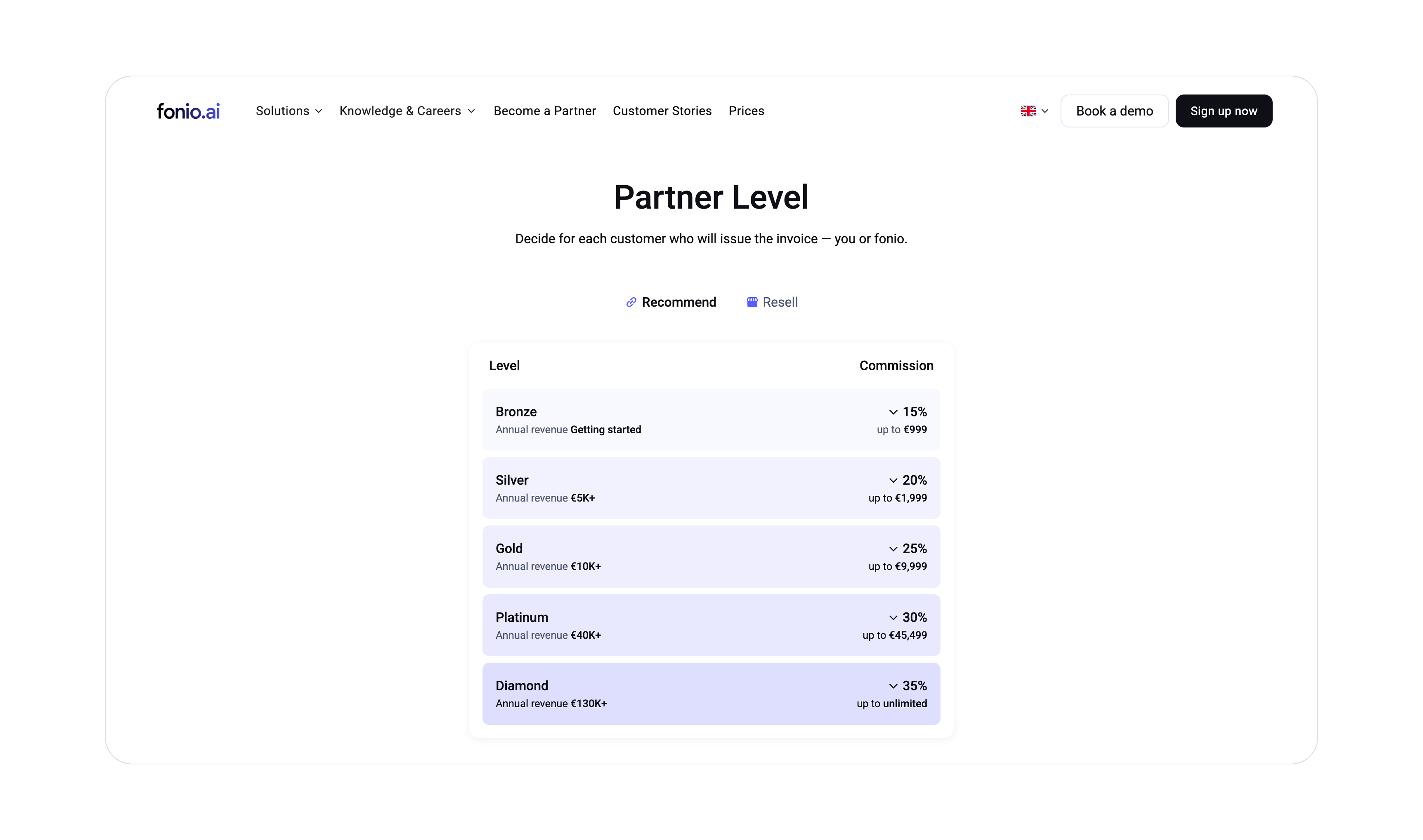
How to set affiliate and partner commission rates
Rewards for affiliates and partners are commission-based. For each new customer, they receive a share of the recurring revenue.
As we learned in the pricing section, SaaS businesses have low scaling costs and can achieve gross margins above 80%. That’s the baseline for a very attractive commission rate, usually between 20% and 35%.
To increase motivation, commission rates should be different depending on how much revenue a partner or affiliate brings in for your business.
How to measure B2B SaaS marketing success
The best marketers test relentlessly: new homepage variants, new onboarding flows or new ad creatives to find the tactics that drive the most revenue. Your measurement framework should support that testing-first approach.
But before we talk about specific metrics, we need to establish attribution.
B2B businesses should have a CRM system that consolidates data about new prospects and existing customers. Then, attribution is simply the process of mapping marketing tactics against relevant CRM data, such as qualified leads or revenue.
In practice, that means being able to see inside your CRM that 140 qualified leads last month came from Meta while only 20 came from LinkedIn. And then making a budget call based on that.
📝 Note: I recommend connecting your billing tool and your product backend with the CRM system. This way, you are not only able to track what happens up until the initial sale but also what happens inside your product, as well as how expansion revenue is developing, for example. A full overview of sales- and product-led growth inside a single source of truth.
📚 Reading Tip: Setting up attribution from scratch is easier than most marketers think. My beginner’s guide to B2B marketing attribution walks you through a simple three-step system inside your CRM.
Core metrics: MQLs and PQLs
For a testing-first approach, you need to focus on metrics that provide a short-term (usually weekly) view into success:
If you measure the short-term success of your sales-led motion, look at the number of marketing-qualified leads (MQLs).
If you measure the short-term success of your product-led motion, look at the number of product-qualified leads (PQLs).
📝 Note: There is no universal definition for MQLs or PQLs. Each business has to set its own rules but it’s crucial that MQLs and PQLs convert significantly better into customers than unqualified leads and users!
Data points for MQLs are usually collected at the signup form. You could, for example, define all leads that provide a business email during the demo request as MQLs if your CRM data suggests that these leads convert at a higher rate.
With PQLs, look at product usage. A user who reaches a certain milestone inside your product, meaning the onboarding flow is successfully finished, is labeled as a PQL if that milestone positively correlates with turning free users into paying customers.
📚 Reading Tip: Learn how to make smarter growth decisions with fewer KPIs by using the North Star method for B2B SaaS marketing metrics.
Support metrics for long-term growth
Support metrics provide insights into mid- to long-term success. The most important ones are:
Website conversion rate: How good is your website at turning traffic into qualified leads and users? Since all of your marketing tactics converge on the website, an uplift here has an exponential impact on growth.
Total brand search: When someone types your business’s name into Google, they conduct a brand search. As you increase your marketing efforts, brand awareness should increase as well. More brand searches and more qualified brand leads are a healthy sign of you capturing market share.
Sales funnel conversion rates: In a sales-led growth motion, leads move through several stages, from the initial demo request to opportunity creation and finally to a closed-won deal. A drop-off might be sales-related but it can also point back to marketing issues, with campaigns creating tons of MQLs but only a few turning into sales-qualified leads.
Activation rate: Looking at the product-led growth motion, how many of your free users actually reach their in-product milestones? A healthy activation rate is the best sign of a good onboarding flow, as well as a user-friendly product design.
Customer rate: How many of your leads and free trial users are turning into paying customers?
Revenue generated and budget spent: How much money are customers bringing in, both in terms of the initial ACV and the actual paid amount? And how does this stack up against the marketing spend? Are there channels with a relatively high efficiency ratio (total revenue / total marketing spend) that could profit from additional resources?
Subscribe to Get Hooked! Marketing
By Fabian Rabenalt
I have seen groups argue for hours about which medium to use before spending no time at all on making the content better. Average copy will stay average no matter where you place it.
I’m hooked man. This is a great intro to your newsletter. I’ve got to write one that intros the POV. Subscribed! Looking forward to your content in my inbox.